
Does Your Sales Methodology Support the Way Your Buyers Want to Buy?

Introduction
Ask B2B buyers who they trust least during a purchase, and the answer isn’t flattering. In TrustRadius’s 2025 buyer research, sales reps came in dead last. Buyers trusted a product demo more. They trusted their own gut more. They trusted reviews written by total strangers more than the person whose job is to guide them through the purchase.
Maybe that’s why so many purchases go nowhere. Forrester’s 2024 State of Business Buying study, based on more than 16,000 buyers, found that 86% of B2B purchases stall somewhere along the way. And even when a purchase does happen, 81% of those buyers end up dissatisfied with the vendor they picked.
If that stings a little, you’re not alone. The missed quota. The win rate that keeps sliding no matter how hard everyone’s working. The deal that goes quiet for three weeks and never comes back. This stuff gnaws at all of us, whether you’re carrying the number or leading the people who are.
Here’s the part that should give you some hope: some sellers don’t have this problem. RAIN Group’s research on top-performing sellers found they close 72% of the proposals they put in front of buyers. Everyone else closes 47%. Same market. Same buyers. Wildly different outcomes.
That 25-point gap isn’t luck, or charisma, or a better territory. It’s specific, learnable behavior. I’ve spent sixteen years studying it: what top performers do, how they think, and why buyers respond to them so differently than they respond to everyone else.
This piece is a look at what I learned, and at The CoNavigator Method for B2B Sales Mastery (TCM), the methodology I built from it. Is this marketing? I won’t pretend otherwise. But I’ll share enough of the thinking behind these ideas that it’ll be worth your time whether or not TCM ever enters the picture for you.
Let’s start with where TCM begins: not with sales process or a sales motion, but with how a seller talks with their buyers and customers.
Great Communication Leads to Great Judgment
 Buyers distrust reps because most reps are trying to sell something, not solve something. And because of that, they’re often poor listeners, which buyers can tell. Far too often in B2B buying research, buyers say they don’t feel understood by the people selling to them.
This is why TCM starts somewhere unusual for a sales methodology: not with a sales process, but with a communication model. It’s called ACC and stands for…
Great Communication: Acknowledge, Clarify, Confirm
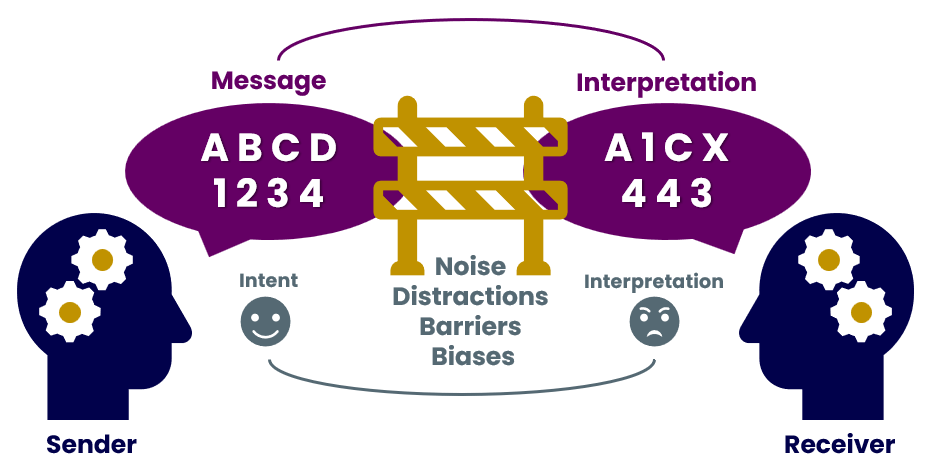 Communication is challenging under the best of circumstances. Noise (literal or mental), distractions, barriers, and cognitive biases can all distort the message, so it isn’t received or interpreted the way the sender intended. The ACC model is designed to improve communication effectiveness and doubles as a skill to let others know how well you understand them (and how much you care).
- Acknowledge means showing the buyer you heard them, including how they feel about what they just told you. That takes empathy, plain and simple: the willingness to sit with what someone’s actually feeling instead of rushing past it to your next question. It sounds like a real response, not a rehearsed line: “You’re feeling pressure from your boss to get this solved quickly.” That’s a “you” statement, not an “I” statement. Most sellers respond to a buyer’s concern by talking about themselves: “I understand,” or “I had a client with the same issue.” That shifts the conversation back to the seller. A “you” statement keeps it where it belongs.
- Clarify means asking questions that get past the surface: “Tell me more about that.” “What have you tried so far?” “What happens if this isn’t solved by the end of next quarter?” I call this peeling the onion, and it’s exactly that: one layer at a time, until you’re at something real. Getting there takes curiosity, the second trait that shows up again and again in top 4% performers. They’re not asking questions to fill in a discovery form. They actually want to know the answer.
- Confirm means summarizing what you heard and checking it before moving forward.
Empathy and curiosity are why ACC works. It can be used in every interaction you have with a buyer, or with anyone, for that matter. It’s a strong communication and active listening skill on its own, and it lets the people you talk to feel understood. That’s always a good thing.
Great Judgment: Need And Solution Alignment
There’s also a judgment call that connects to all of this, and it occurs specifically early in the sales process, when a seller is qualifying an opportunity and running discovery. Qualification frameworks like BANT, MEDDICC, SPICED, and others all eventually get to some version of it: is this a real opportunity worth pursuing? Usually that question is answered for seller-centric reasons: don’t waste the quarter, there’s no budget, there’s no urgency, and so on. It’s important to determine, and TCM does it too. But then, TCM layers in the concept of NASA, or Need And Solution Alignment.
Before anything else moves forward, there are key questions you must answer:
- Do you know, for certain, that the solution you’re able to offer solves the real problem for this buyer?
- Are you operating in your buyer’s best interest?
- In other words, do you have need and solution alignment?
If the answer is no, TCM says to stop, not push forward.
At its best, selling is a form of servant leadership, and NASA is the foundation. Buyers distrust sellers because of how we’ve behaved, as a group, over time. We behaved our way into this mess. Only we can behave our way back out. This is one way we can do that.
To close the loop here, it’s ACC, used during qualification and discovery, that unveils NASA, or the lack of it. There’s more coming soon on how TCM approaches qualification and discovery in depth, where NASA will show up again.
Real Frameworks, But Judgment Over Scripts
 Here’s a fair question. If TCM is built on empathy and curiosity, where’s the actual structure? Isn’t this all a bit soft?
It isn’t, and the discovery model is the clearest proof. TCM calls it a Situation Assessment, and it runs on a framework called COIN-OP: Challenges, Opportunities, Impacts, Needs, Outcomes, Priorities. The first three describe the Current State where the buyer stands today. The last two describe the Desired Future State where they want to be. The Need is whatever is required or has to happen to close the gap between the two, and TCM asks sellers to dollarize that gap wherever possible, so it turns into an actual business case instead of a vague sense that things could be better.
That’s real structure. What it isn’t is a script. TCM doesn’t hand a seller a list of questions to ask every buyer, in every industry, for every product. It teaches the framework and trusts the seller to build the conversation from it. (I assist clients with this, as desired, and so could an internal team: product marketing, sales enablement, RevOps, or GTM functions could all help with this. Context reigns.)
Frameworks like this provide flexibility and can fit a variety of organizations and situations. They can flex. I call this the Accordion Principle, meaning that the concepts behind a framework or model can squeeze down to fit a quick, simple sale, or expand out to carry a long, complicated one. COIN-OP does that. So does the rest of TCM. POSE, the model TCM teaches for prospecting and messaging, gives a seller a four-part shape: Problem, Outcome, Solution, Explore. It doesn’t hand anyone a script for what problem to open with or what outcome to promise. Those are contextual. Every company has to build its own version of that story, grounded in what it actually solves and delivers. The model for resolving concerns (ACCRC, more coming soon) works the same way: it’s a clear process, but contains no prepared comebacks.
That’s more work up front than buying a set of scripts or prescribed messaging. It’s also the only way any of this holds up once a seller is in front of a real buyer, in a real conversation, that never goes quite the way the training said it would. It’s better to teach people to think and adapt.
Discovery is one place where this shows up clearly. Top performers don’t float a solution the moment they hear something that indicates a need for what they sell. They stay patient, building the fuller picture one piece at a time. It’s like the way someone sets up a row of bowling pins before they ever mean to knock them down. Average sellers jump at the first opening. Top performers build deeper. It’s why I often say that patience is a superpower of selling.
Adaptive Selling, By Design

Let’s continue this thread about adaptability. Structure without judgment turns into a script. Judgment without structure turns into improvisation nobody can coach. TCM allows for both at once, and even that’s only part of what I mean by adaptive selling.
The blend looks like this: consultative mindset for how you show up in the conversation. Value selling for how you frame what you offer. Insight selling for the moments when a buyer doesn’t yet see the problem or opportunity clearly and needs help to see things differently. Outcome selling underneath all of it, because none of the rest matters if it doesn’t lead somewhere the buyer actually wants to go.
None of those four approaches is new on its own. What’s less common is teaching a seller to move between them, on purpose, based on what a specific buyer needs in a specific moment, rather than picking one lane and staying in it for every deal.
That takes sales judgment and situational fluency. It also takes a genuine instinct to help rather than just sell something, the kind of servant leadership NASA already supports. TCM is built for this, providing the frameworks and models to further support adaptability, on top of the trust that ACC and NASA establish first. Add all that together, and you have an adaptive sales methodology.
Modern Qualification, With a Test Built In

Back to that qualification question from earlier. TCM’s answer to it is DM-DC UT-OOE: Decision Makers, Decision Criteria, Urgency and Timing, Outcomes, Options, Economics. Six factors, and yes, the acronym is a mouthful on purpose. It rhymes, so it’s easier to remember under pressure, which is usually when a seller needs it most.
- Decision Makers means knowing who’s actually involved and whether you have real access to them.
- Decision Criteria means understanding what will drive the choice, all the way down to what each individual stakeholder personally needs to feel good about it.
- Urgency and Timing means finding out if there’s a real reason to move now (compelling event, compelling deadline, compelling business case), not a hoped-for one, and whether you can meet their timing expectations (it’s a two-way street).
- Outcomes means the buyer can state, in specific terms, what they’re trying to achieve.
- Options means knowing what else is on the table, including competitors, doing nothing at all (status quo), or DIY.
- Economics means there’s a real budget, or a credible path to funding.
Any one of those factors can be missing, and a deal that looked promising on a Tuesday can look very different by Friday. That’s fine. Qualification in TCM isn’t a single yes-or-no gate at the start of a deal. It’s something a seller keeps checking as the deal moves and the picture changes. It’s progressive.
What sets this apart isn’t the six factors by themselves. Plenty of frameworks have their own version of this list. What sets it apart is NASA validating that you’re operating in your buyer’s best interest. A deal can score well on every one of the six factors and still fail the only test that actually matters: does this genuinely serve the buyer? If it doesn’t, TCM says walk away, even from a deal that looks perfectly qualified on paper.
Where the Same Test Shows Up Again
Three places in a normal sales cycle tend to get seller-centric fast, even in methodologies that start out well. TCM keeps the same test running through all three.
The first is influence
 TCM teaches Aristotle’s Ethos, Pathos, and Logos: credibility, emotion, and logic, used together to encourage a buyer to move forward with confidence. Plenty of sales training treats emotion as manipulation or avoids it entirely. TCM treats it as a normal, honest part of how humans decide things, and teaches sellers to use it well. The difference is where it sits: only after NASA is confirmed. Influence aimed at a buyer whose need doesn’t actually match your solution isn’t selling. It’s just manipulation for the seller’s gain. Buyers are people. People can be indecisive. They feel the Fear of Messing Up, as JOLT authors call it, or risk-avoidance. Sometimes they need help deciding to do things that are in their own best interest.
The second is prospecting

POSE, the story format from earlier, opens with the buyer’s problem, not the seller’s product. “Companies like yours often run into X. We’ve helped them get to Y.” For clarity, that’s not a full POSE Value Story, but it is the premise. The point isn’t to be clever. It’s to be relevant fast enough that a busy buyer decides it’s worth another thirty seconds. A story that opens with your company, your solution, and your three award-winning features is a pitch. A story that opens with a problem that buyer experiences has a chance of being a conversation.
Special Note: In the image above, you’ll see how Ethos, Pathos, and Logos (EPL) can layer into a POSE Value Story to be more compelling. On the surface, this may seem to contradict the earlier point about not using EPL until NASA is confirmed. It is a fine line, so keep in mind that you’re trying to earn a conversation to determine if you have NASA and can help. If you find you don’t and can’t, you can step away at that time. But you likely won’t get to that level of detail in an appointment-setting call. So, use EPL with POSE to get a foot in the door, and then behave accordingly based on what you learn.
The third is what happens when a buyer pushes back

TCM never uses the word objection, and never talks about overcoming or handling anything. Buyers aren’t obstacles to be handled. The model for navigating and resolving concerns is ACCRC: Acknowledge, Clarify, Categorize, Respond, Confirm. A seller acknowledges the concern with real empathy, clarifies the actual root of it, quietly categorizes what kind of concern it is (there’s skepticism, a genuine misunderstanding, a real disadvantage, or something that’s changed since the last conversation), then responds to that specific thing instead of firing off a rehearsed comeback. It’s a shift in mindset and language, using concern instead of objection, but it changes how a seller thinks about and navigates the entire moment. You can’t gain agreement with someone by “handling” them. You can only have an authentic conversation.
Speaking Every Stakeholder’s Language

A CFO and a plant manager can sit in the same buying committee, look at the same proposal, and care about two completely different things. TCM calls the categories Value Drivers: Business, Execution, Purpose, and Personal.
- Business Value is the financial and operational case.
- Execution Value is whether the thing actually makes daily work easier.
- Purpose Value is whether it aligns with what the organization says it stands for.
- Personal Value is what it means for the individual sitting across the table, their workload, their reputation, their own goals.
Most sellers pick one message and repeat it to everyone. TCM calls the alternative “multilingual selling”: same solution, same facts, described in the language that actually lands for each person hearing it. It’s more work than writing one pitch and reusing it. It’s also the difference between a proposal or presentation that hits home for everyone versus a portion of the buying committee.
Mapping the Buyer Landscape for the Buyer’s Sake

A buying committee with multiple stakeholders rarely functions as one clear voice. There’s a Champion pushing for you, maybe a Coach quietly helping from the sidelines, a vocal Detractor who isn’t sold, and sometimes an Approver (or what I call a “Lurking Approver”) who never shows up to a single meeting but can still say no at the very end. Multi-threading and managing relationships with more than one person on that committee is part of this. So is navigating the landscape itself: building alliances and meeting each person’s buying process exit criteria at every stage. Together, they improve your chance of a win, and they’re often the only way the committee itself gets the full picture it needs to decide well. A single champion, however enthusiastic or powerful, is one perspective in a sea of others. Sometimes they have enough political juice on their own; sometimes they need the support of others.
A seller who never maps this rarely finds the Detractor until late, rarely finds the Approver until it’s too late, and rarely notices that the Champion has been carrying the case alone with no support from anyone else in the room (perhaps including you). Mapping the landscape well radically increases the chance of a decision in your favor. And since you’re paying attention to NASA, that decision is a good one for the company, as well.
Tracking What Each Person Needs to Say Yes

Once you know who’s in the room, their influence, and how they feel about you, the next question is what each of them individually needs before they’re comfortable moving forward. Buying Process Exit Criteria, or BPEC, is whatever a decision maker needs to see, hear, feel, understand, or believe at each stage of their buying process before they’ll agree to the next one.
Here’s what makes this different from a generic sales stage checklist. Two people in the same buying committee, at the same point in the same deal, can have the same or entirely different exit criteria. And it can vary by stage. The Facilities Director might need proof that the rollout won’t disrupt daily operations. The CFO might need to see the numbers and ROI hold up under a worst-case scenario. The Maintenance Supervisor might want to know their team will be trained and supported. Treating the whole committee as one buyer with one set of needs is how deals stall right at the finish line, with everyone assuming everyone else is already convinced.
Uncover it. Clarify it. Satisfy it. Confirm it’s actually satisfied, for each person, at each stage. It’s more tracking than most sellers bother with. It’s also the difference between a deal that closes because everyone who mattered was actually ready, and one that stalls because somebody important was never asked.
Where It All Comes Together

Everything above can sound like a lot of separate pieces: COIN-OP, Value Drivers, POSE, discovery questions, common concerns, competitive positioning, BPEC. It feels like a lot at first. Implementing well can change that, but there’s a tool that will also help.
TCM’s Buyer-Centric Messaging Matrix helps pull many of the concepts together. For each buyer persona, a seller works through the COIN-OP for that persona, the Value Drivers that matter most to them, a POSE Value Story built to open the conversation, the discovery questions worth asking, how to present a solution in their terms, the concerns most likely to come up and how to resolve them, how to position against competitors, and how the outcomes they want get delivered in the language of their own Value Drivers. Layered on top, for active opportunities, sellers track each contact’s level of influence, their attitude, their role on the buying committee, and their specific exit criteria.
Keep in mind that this happens at two different levels. It can be done for marketing at the persona level to support content marketing and demand generation, and for salespeople to support new business development. It can also be done at the person level in an active opportunity or account. Generic is fine to get started, but for salespeople, especially in an opportunity, messaging needs to be as personalized as possible, based on the factors in the messaging matrix. The point, though, for now, is that the tool helps bring many of the concepts in TCM together.
Fill it out for your five most common buyer personas, and you’ve got a working reference for your prospecting and call planning. Keep it close for later, and it will help you personalize messaging as you learn more about the real stakeholders.
Closing Thoughts
Most sellers don’t work from a formal sales methodology at all. They tend to work from whatever they’ve picked up: something a manager taught them, a book or two they liked, something from an online guru, a tip from another seller, a habit that worked once and never got questioned since. It’s personal. It’s different rep to rep. And it can’t be coached, because there’s nothing shared to coach against. It’s literally a free-for-all in some companies.
Other companies go a different direction. They pick whatever methodology is popular this year, usually one tied to a new book, roll it out without regard to copyright infringement, and still don’t reinforce it the way they should. Six months later, it joins the free-for-all blend. For a while, though, at that company and others who liked the popular book, every seller sounds the same: monkey-see, monkey-do, reciting the same script with a different logo on the slide.
TCM was built on sixteen years of observing what the best sellers actually do, not what’s popular or new. Based on communication skills and servant leadership. Radically buyer-centric. Structured enough to coach. Flexible enough to never turn into a script. And built, at every layer, on the same simple test: are you operating in your buyer’s best interest, right now, in this specific moment?
That’s the question worth asking about your own methodology, whatever it is. Not once. Every time. If you want a rigorous way to evaluate it against criteria like these, whether that’s TCM or anything else, my eBook, How to Choose and Implement a Sales Methodology That Delivers Results, walks through exactly that.
Resources
- TrustRadius, Bridging the Trust Gap: B2B Tech Buying in the Age of AI (2025)
- Forrester, The State of Business Buying, 2024
- RAIN Group Center for Sales Research, Defining Effective Sales Management
- How Does Your Sales Methodology Compare to What Top Performers Do Differently
- You Fixed Your Sales Methodology. Why Isn’t It Moving the Needle?
- How to Choose and Implement a Sales Methodology That Delivers Results (eBook)
How to Follow My Work, Connect, or Work With Me
- Revenue Acceleration Sprints: Learn More Here (ungated PDF download)
- The Building Blocks of Sales Enablement Book: Find it on Amazon
- My Sales Enablement Straight Talk Newsletter: Sales Enablement Straight Talk! (Subscribe!)
- My LinkedIn Profile: https://www.linkedin.com/in/mikekunkle
- My Linktree: https://linktr.ee/mikekunkle
- Get in Touch: https://conavigatormethod.com/contact/
About Mike

Mike Kunkle is an internationally recognized expert on sales training, sales effectiveness, and sales enablement. He’s spent over 30 years helping companies drive dramatic revenue growth through best-in-class enablement strategies and proven-effective sales systems—and he’s delivered impressive results for both employers and clients. Mike is the founder of Transforming Sales Results, LLC, where he does research and publishes thought leadership, designs sales training, delivers workshops, and helps clients improve sales results through a variety of sales effectiveness practices, sales systems, and advisory services. His book, The Building Blocks of Sales Enablement, is available on Amazon, and The CoNavigator Method for B2B Sales Mastery will be published in 2026 and is available now as a training program.
Discover more from MikeKunkle.com
Subscribe to get the latest posts sent to your email.
